


Artificial intelligence tools to help with sustainability reporting
Posted 10 months ago by Admin Myktex 1 in Sustainability
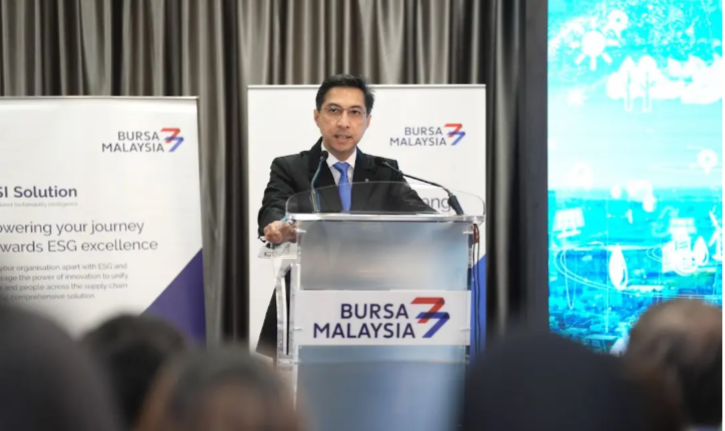
Artificial intelligence-powered (AI) tools can help companies with their sustainability reporting process, and free up resources for them to spend on decarbonisation initiatives, said speakers at an event organised by BoardRoom and Bursa Malaysia Bhd.
Artificial intelligence-powered (AI) tools can help companies with their sustainability reporting process, and free up resources for them to spend on decarbonisation initiatives, said speakers at an event organised by BoardRoom and Bursa Malaysia Bhd.
The event, entitled 'Game-changer: AI tech to elevate sustainability reporting and advisory', was held at Bursa Malaysia.
Earlier this year, corporate services provider BoardRoom partnered Bursa Malaysia to promote adoption of the Centralised Sustainability Intelligence (CSI) solution, which is Bursa’s official sustainability reporting channel.
The CSI’s disclosure modules supports the International Sustainability Standards Board’s IFRS S1 General Requirements for Disclosure of Sustainability-related Financial Information and IFRS S2 Climate-related Disclosures, which are mandated under Malaysia’s National Sustainability Reporting Framework.
The CSI platform also hosts value-added services by CarbonGPT, which provides an AI-powered sustainability reporting tool, and SustenyX, which uses AI to generate gap analysis reports for companies that want to improve their ESG rating scores.
CarbonGPT and SustenyX are Malaysia Digital Status companies under the Malaysia Digital Economy Corporation.
“Our philosophy is simple. Better reporting drives better practices, and better practices build stronger competitiveness,” said Datuk Fad’l Mohamed, CEO of Bursa Malaysia during his opening address.
“With Malaysia setting its sights on becoming a sustainable AI nation by 2030 under the 13th Malaysia Plan, I believe that such a collaboration will contribute to realising our nation’s aspiration of becoming a technology-driven economy.”
During the panel session with Chong Kok Wai, regional director of sustainability for BoardRoom Group, Matthew Wong, CEO and co-founder of CarbonGPT and Alan Puah, managing director of Sustenyx, much was said about the time consuming process of collecting data for sustainability reporting, and how this can be addressed by using AI-powered tools.
“Working with more than 150 public-listed companies (PLCs) has told us that on average, they spend six months and more than 1,000 hours on sustainability-related compliance only,” said CarbonGPT’s Wong.
Using AI tools to automate data collection, generate reports and even perform gap analysis to identify areas of improvement, could accelerate the process and allow companies to go beyond compliance, he added.
Additionally, Wong noticed that many PLCs are only focused on data governance for sustainability, instead of linking it back to their strategy.
“The sole purpose of you doing sustainability is that you are able to tell your investors that you are ready for this risk, and you see opportunity in the next five to 10 years, and that will make you more investable than your peers.”
Echoing Wong, BoardRoom’s Chong said that sustainability practitioners should be spending more time on implementing decarbonisation initiatives, and see sustainability reporting as a health check. Appropriate action to address the gaps must then be taken.
“If you do a report this year and you don’t close the gaps, next year, you will still be the same. You can’t go on and report the same thing over and over again with the same results... You are just ticking the boxes because the regulator is asking you to report this,” said Chong.
“What happens after the report? Like your financial report, in the boardroom, you would talk about how to improve the financial results. In the boardroom, will sustainability reporting be at the forefront [as well]? How do we look at the opportunities and risks?”
PLCs are also eager to improve their ESG rating scores, but they must be realistic, said SustenyX’ Puah. The company uses AI to predict PLCs’ FTSE4Good ESG score, identify the gaps and provide recommendations.
A common mistake that PLCs make is setting unrealistic targets to improve their scores, said Puah. Getting there requires guidance and action. There is also confusion about the various sustainability reporting standards in the market. Meanwhile, some companies see this as a branding exercise, so they can promote their ESG credentials to the world.
These three factors must be considered by companies as they go on this journey, he said.
“We have managed to produce this whole result and outcome in a very short time. What used to take a few months is done in a few days. That’s the power of AI. But I think, to set the tone going forward, it’s very important that these points must be considered in your planning,” said Puah.
(Source: The Edge)